Is My Testimony Good Enough?

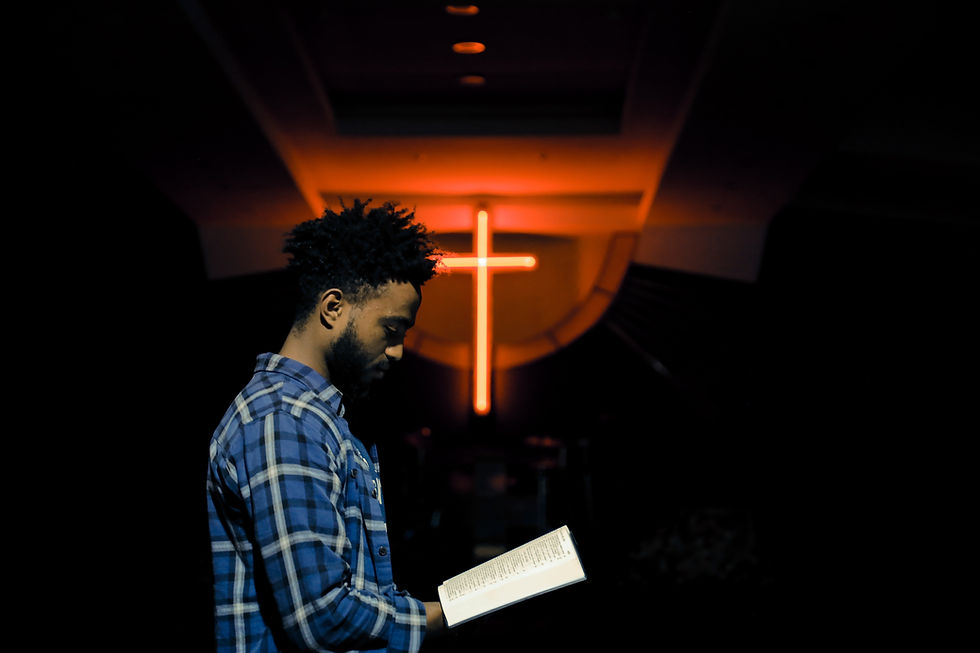
We love hearing stories about God's grace working powerfully upon a human heart. Specifically, I mean that we love hearing testimonies of dramatic life change.
We love radical salvation stories: God's powerful grace, sinners pursued and saved, and sin left behind for holiness. These things are good. I rejoice in God when I hear stories such as these!
But—I'm afraid that sometimes we lift these radical stories up so high that it can cause a sad, troubling effect. Many ask themselves: "Is my testimony good enough?"
Let me explain. For years I've heard story after story from those who feel as if they have no testimony or that their testimony is not good enough. Some even wonder if they could truly be saved. Many feel bad or some level of embarrassment about their testimony. They think it should be more impressive! Some have been made to feel in the church baptism process like they need to have a story of radical grace in order to be baptized and for it to be a "proof" that they are indeed truly saved.
Now, is it possible for someone to lack a testimony because they do not in fact have saving faith? Yes, I suppose this is possible. But, in practice, I've found it much more common for seemingly authentic Christians to struggle here.
Indeed, many seem to be genuine Christians who deeply love the Lord. They see themselves as sinners. They have repented and believed the gospel. Yet many do not have one decisive moment where they left a visibly sinful lifestyle behind, heard the gospel, believed the gospel, and came out a transformed Christian on the other side. Many do see pride and many other sins in their lives. However, they simply don't often have stories that demonstrate the outward, visible type of sins. Some have pharisaical stories of self-righteousness and judgment. Instead of a single decisive moment, many claim to have heard the gospel as far back as they can remember. They struggle when we glorify stories that are filled with sin and have one decisive moment of saving faith. It seems, to them, like this becomes the model of what a Christian testimony should sound like.
And here is a common theme: they often grew up in a household with Christians where the gospel was shared with them at an early age. They may have been trained in the Scriptures from youth. Perhaps, they were in a great church from childhood.
Now, let me clarify what I don't mean:
I don't mean that a person without a radical testimony doesn't rejoice with the person who has a radical testimony (they do!).
I don't mean that a person without a radical testimony isn't happy to hear stories that demonstrate God's grace, mercy, and power (they are!).
I don't mean that a person without a radical testimony makes someone else's story and baptism about themselves (they typically don't).
Instead, here is what I mean:
Perhaps we haven't adequately taught on the doctrine of sin.
Perhaps our functional theology (what we do) is sometimes unwittingly training people in ways that warps our formal theology (what we believe).
Perhaps we haven't adequately emphasized that it is a wonderful blessing to grow up in a household with a Christian parent(s) who teaches the Scriptures and the gospel.
And perhaps we haven't communicated that it is a wonderful blessing to be in a gospel-believing and gospel-preaching church at a young age.
While Jesus shows that those who have been forgiven much love much (Luke 7:41-43), he is not arguing for people to sin more so that people may love more. Moreover, our doctrine of sin shows that it is evil to disobey and commit treason against a holy God (Gen. 3). We all do that (Rom. 3:23). Furthermore, Paul even highlights that after a person is saved they should not think that they need to sin more to increase grace more (Rom. 6:1). No, that is a warped way of thinking.
There are a lot of ways we could approach this issue, but let's tackle it by looking at just a few verses from Romans:
(1) All people are sinners. (Not 2 classes of sinners)
[Rom 3:23 ESV] " . . . for all have sinned and fall short of the glory of God"
[Rom 3:10-12 ESV] " . . . as it is written: 'None is righteous, no, not one; no one understands; no one seeks for God. All have turned aside; together they have become worthless; no one does good, not even one.'"
(2) Sinners must be justified by God's grace through Jesus Christ as a gift through their saving faith. (That is, whether you have an impressive testimony or not)
[Rom 3:24a ESV] "and are justified by his grace as a gift"
[Rom 3:22 ESV] "the righteousness of God through faith in Jesus Christ for all who believe . . ."
[Rom 3:25 ESV] "whom God put forward as a propitiation by his blood, to be received by faith. This was to show God's righteousness, because in his divine forbearance he had passed over former sins."
[Rom 3:26 ESV] "It was to show his righteousness at the present time, so that he might be just and the justifier of the one who has faith in Jesus."
(3) We are not asked to sin more that grace may be increased. (It is true that the context is after we are saved, but I would assume that if we were to ask God if we should have sinned more before we were saved he would give a resounding "No".)
[Rom 6:1 ESV] "What shall we say then? Are we to continue in sin that grace may abound?"
To conclude, let's consider what Paul says to Timothy here:
"But as for you, continue in what you have learned and have firmly believed, knowing from whom you learned it and how from childhood you have been acquainted with the sacred writings, which are able to make you wise for salvation through faith in Christ Jesus" (2 Tim. 3:14-15 ESV). Paul claims that Timothy had learned and believed the Scriptures, which lead to salvation in Christ Jesus, from an early age. Who taught Timothy? It was likely his mother and grandmother. Paul says this earlier in the same letter:
"I am reminded of your sincere faith, a faith that dwelt first in your grandmother Lois and your mother Eunice and now, I am sure, dwells in you as well" (2 Tim. 1:5 ESV).So, fathers, grandfathers, mothers, and grandmothers, you are not ruining your child's (or grandchild's) testimony by teaching them the gospel and the Scriptures. Instead, you are doing the most important, eternal work in all of the universe.
And for those who have grown up in a home or church environment where you learned the gospel at an early age and did not go on to sin in visible ways, do not consider your testimony invalid or second-class. You have experienced an incredible, priceless blessing! You can rejoice in God through the saving faith of a sinner that has a wild testimony while at the same time rejoicing in your testimony! He saves sinners with wild testimonies and those without wild testimonies!
Both the older brother and the younger brother (i.e., prodigal son) need to be saved. They are both sinners in need of God's grace (see Luke 15:11-32).